August 2, 2026
Back to School, Wrestling & Airstrip Attack!
Hey neighbors! Big week ahead — the kids head back to class Wednesday, National Night Out lights up Matter Park on Tuesday, Airstrip Attack comes to the airport Friday through Sunday, and Saturday brings a jam-packed lineup with Heroes & Legends wrestling, the Wheels n Chrome car show, and Moonshine Bandits live at Ballard. We're also keeping an eye out for missing K-9 Ellie Mae. Grab a lemonade and catch up on it all!
Events
2026 Dave Huffman Memorial Golf Outing
via allevents.in
Sun, Aug 2 · 1:00 PM
Marion Elks Lodge & Country Club
https://allevents.in/marion/2026-dave-huffman-memorial-golf-outing/200030112735846The 3rd Annual Dave Huffman Memorial Golf Outing will take place at the Marion Elks Country Club!! It is a BLAST with lots of give aways, fun golf and all for a great cause! This is the major fundraiser for the Dave Huffman Scholarship! Sponsored by OMC Cares, Inc., the charity arm o
Find it on Facebook: facebook.com/mississinewacigars
Organization Day for Teachers (no school)
via Marion Community Schools
Mon, Aug 3
https://www.marion.k12.in.us/apps/events/35708780/Organization Day for Teachers (no school).
Welcome Back
via Marion Community Schools
Mon, Aug 3 · 9:15 AM
Walton Center @ MHS
https://www.marion.k12.in.us/apps/events/43759543/Marion Community Schools' annual Welcome Back staff event will be on the first teacher day of the 2026-27 school year. All staffers are invited. There will also be a free breakfast served prior to this event. Employees will receive schedule and location information. Read more

Board of Works, Regular Meeting, 8/3/26
via City of Marion
Mon, Aug 3 · 10:00 AM
https://cityofmarion.in.gov/news-events/board-of-works-regular-meeting-8-3-2026The Marion Board of Public Works & Safety will meet on Monday, Aug. 3 rd , 2026 , at 10 am in the Council Chambers of City Hall. Minutes and upcoming agendas are posted here .

Back to School 2026
via Eventbrite
Mon, Aug 3 · 6:00 PM
Tashema Davis Fine Art Studios
https://www.eventbrite.com/e/back-to-school-2026-tickets-1996318337888Rather its a painting for you and your classroom come join us. Maybe you can create it as a gift for your new teacher or old one.

National Night Out
via Show Me Grant County
Tue, Aug 4 · 3:00 PM
Matter Park, Marion
https://showmegrantcounty.com/event/national-night-out-4/National Night Out at Matter Park, Marion.

Summer please dont go!!!
via Eventbrite
Tue, Aug 4 · 6:00 PM
Tashema Davis Fine Art Studios
https://www.eventbrite.com/e/summer-please-dont-go-tickets-1996318738085Join us friends!

Common Council, Regular Meeting, 8/4/26
via City of Marion
Tue, Aug 4 · 7:00 PM
https://cityofmarion.in.gov/news-events/common-council-regular-meeting-8-4-26The Common Council will hold a regular meeting at 7 pm on Tuesday, Aug. 4 th , 2026 in Council Chambers of City Hall. Find the agenda and latest approved minutes here .

Gas City Concerts at the Park
via Show Me Grant County
Tue, Aug 4 · 7:00 PM
701 S. Broadway St, Gas City, IN
https://showmegrantcounty.com/event/gas-city-concerts-at-the-park-29/Gas City Concerts at the Park at 701 S. Broadway St, Gas City, IN.
First day of classes (K-12)
via Marion Community Schools
Wed, Aug 5
all MCS schools
https://www.marion.k12.in.us/apps/events/35708774/NOTE: Little Giants Preschool classes start 8/10 Read more
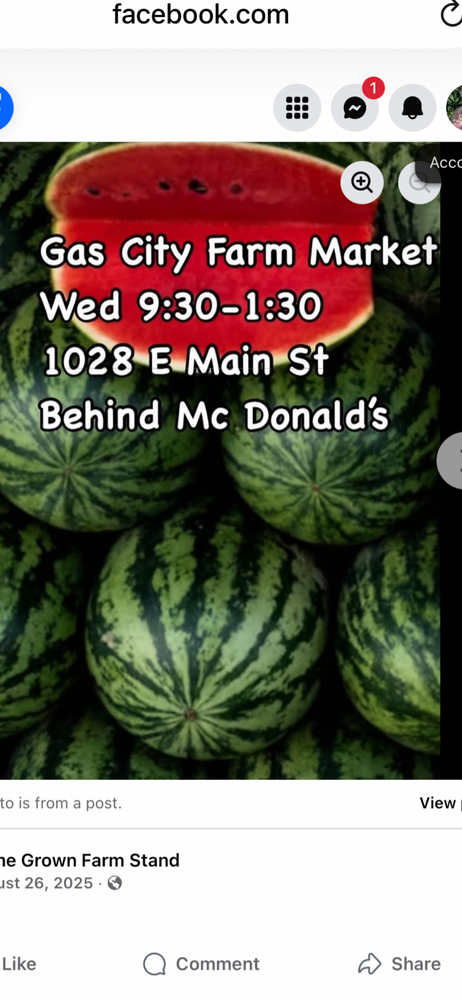
Gas City Farm Market
By Tammy Johnson
Wed, Aug 5 · 9:30 AM
Behind the Only McDonald’s
Every Wednesday 9:30-1:30 pm
1028 E Main St.Gas City 46933
Behind the Only McDonald’s in Gas City

The Toy Factory – Concert at the Stage
via Show Me Grant County
Wed, Aug 5 · 7:00 PM
James Dean Memorial Theatre, Marion
https://showmegrantcounty.com/event/the-toy-factory-concert-at-the-stage/The Toy Factory – Concert at the Stage at James Dean Memorial Theatre, Marion.
Texas Roadhouse Dine to Donate
via allevents.in
Thu, Aug 6 · 3:00 PM
Texas Roadhouse (Marion, IN - 4200 S. Western Avenue)
https://allevents.in/marion/texas-roadhouse-dine-to-donate/200030357649525Join us for a Dine to Donate Night benefiting the Mississinewa Valley Band! Mark your calendars for Thursday, August 6, and enjoy a delicious meal at Texas Roadhouse in Marion while supporting your community band. From 3:00 PM to 10:00 PM, Texas Roadhouse will donate **10% of your food purc
Find it on Facebook: facebook.com/mississinewavalleyband

2026 Indy Airstrip Attack by Indiana Corn and First Farmers Bank & Trust
via Eventbrite
Fri, Aug 7
Marion Municipal Airport
https://www.eventbrite.com/e/2026-indy-airstrip-attack-by-indiana-corn-and-first-farmers-bank-trust-tickets-1981451126659OFFICIAL EVENT WEBSITE: www.SHIFT-S3CTOR.com
Warriors Blend Inc. 2026 Wheels n Chrome Car & Motorcycle Show
via allevents.in
Sat, Aug 8 · 10:00 AM
Ballard Field, Marion Indiana
https://allevents.in/marion/warriors-blend-inc-2026-wheels-n-chrome-car-and-motorcycle-show/200028998682501“2026 Wheels n Chrome Car & Motorcycle Show to be held August 8th 2026 at the new location of Ballard Field in Marion, Indiana. 10am to 2pm DJ, Food Vendors, 50/50, Dunk Tank, T-Shirts, Trophy’s for both Vehicles & Motorcycles Motorcycle Games Posting of the Colors National Anthem Wares
Find it on Facebook: facebook.com/mdhouser

Heroes and Legends Expo & Wrestling
via Show Me Grant County
Sat, Aug 8 · 2:00 PM
YMCA, Marion
https://showmegrantcounty.com/event/heroes-and-legends-expo-wrestling/Doors open at 2pm. Purchase tickets online VIP Ringside Table For 6 $321.96 incl. $21.96 Fee Table sitting at ringside w/6 tickets includes funfest and event Front Row Ticket $33.85 incl. $3.85 Fee Front row ticket for live event plus admission to fan fest 2nd Row ticket $33.85 incl. $3.85 Fee 2nd row ticket for live event plus admission t o fan fest
MAC Gala
via Show Me Grant County
Sat, Aug 8 · 6:00 PM
https://showmegrantcounty.com/event/mac-gala/The Marion Arts Commission hosts an evening celebrating the arts! You will love this intimate evening of art, food, and fundraising!

Moonshine Bandits in Marion
via allevents.in
Sat, Aug 8 · 7:00 PM
Ballard Soccer Fields
https://allevents.in/marion/moonshine-bandits-in-marion/3300030219154104🎤 Experience Moonshine Bandits Live at Ballard Soccer Fields on Saturday, August 8, 2026! 🎤 The countdown has begun! Moonshine Bandits is taking over Ballard Soccer Fields on Saturday, August 8, 2026, and with hits like Red, White & Boozed, Dead Man's Hand and Outback (Extended Remix) and a f


Sports
TU softball to host prospect camp, fall round-robin tourneys
via Chronicle-Tribune Sports
https://www.chronicle-tribune.com/sports/tu-softball-to-host-prospect-camp-fall-round-robin-tourneys/article_56458b8d-cc90-50fc-9c88-fde9336f4a6c.htmlThe Taylor softball program is set to host a prospect camp along with a pair of round robin tournaments this fall at Gudakunst Field.

Team Marion USA off to games in Taiwan
via Chronicle-Tribune Sports
https://www.chronicle-tribune.com/sports/team-marion-usa-off-to-games-in-taiwan/article_d8b9ad09-6788-5420-84a5-6560a9404df0.htmlCulture, camaraderie and competition will all be part of what’s likely to be a life-altering experience for a group of teenage athletes representing Marion and Grant County in the coming days.
Taylor University recognizes top student-athletes for 2025-26
via Chronicle-Tribune Sports
https://www.chronicle-tribune.com/sports/taylor-university-recognizes-top-student-athletes-for-2025-26/article_a47803cd-2c18-5965-a984-e30fc278bc65.htmlTaylor University presented its top honors for student athletes earlier this week.
Community news
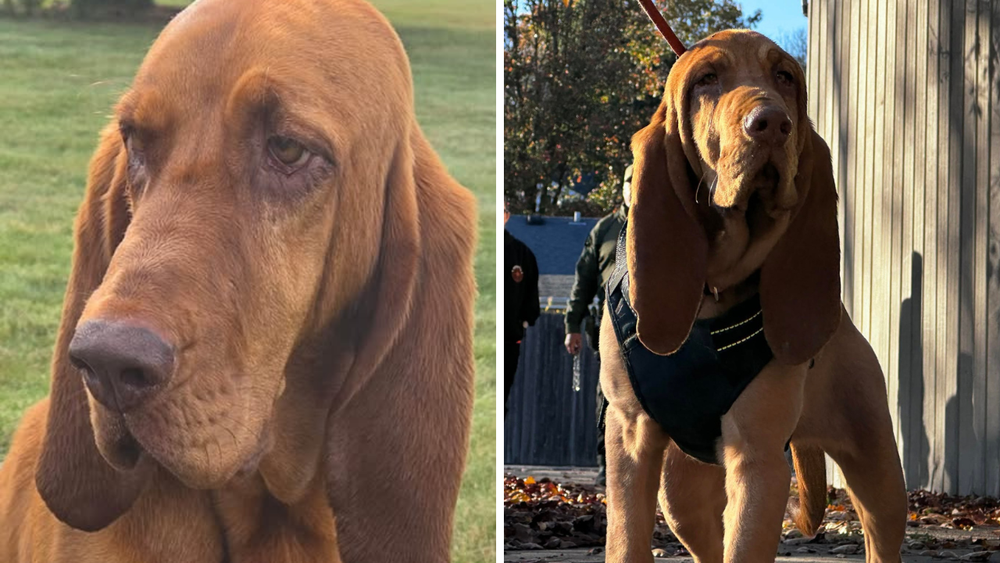
Grant County officials seek public help finding missing K-9 Ellie Mae
By WRTV
https://www.wrtv.com/news/local-news/grant-county-officials-seek-public-help-finding-missing-k-9-ellie-maeGRANT COUNTY, Ind. (WISH) — The Grant County Sheriff’s Office is seeking the public’s help locating its K-9 bloodhound who ran off sometime Thursday evening.
What OurWeek is, in under a minute
By OurWeek
OurWeek is a free weekly calendar and bulletin board for Grant County — everything going on around here, in one place, once a week.
Anybody in the county can put something in it: an event, a photo, a yard sale, a job opening, a ball score, a thank-you to a neighbor who earned one. Post it once and it shows up in the weekly email, on this website, on the Facebook page, and on a one-page sheet you can print and hang up at work. Nothing to log into, nothing to pay.
Here's the short version.
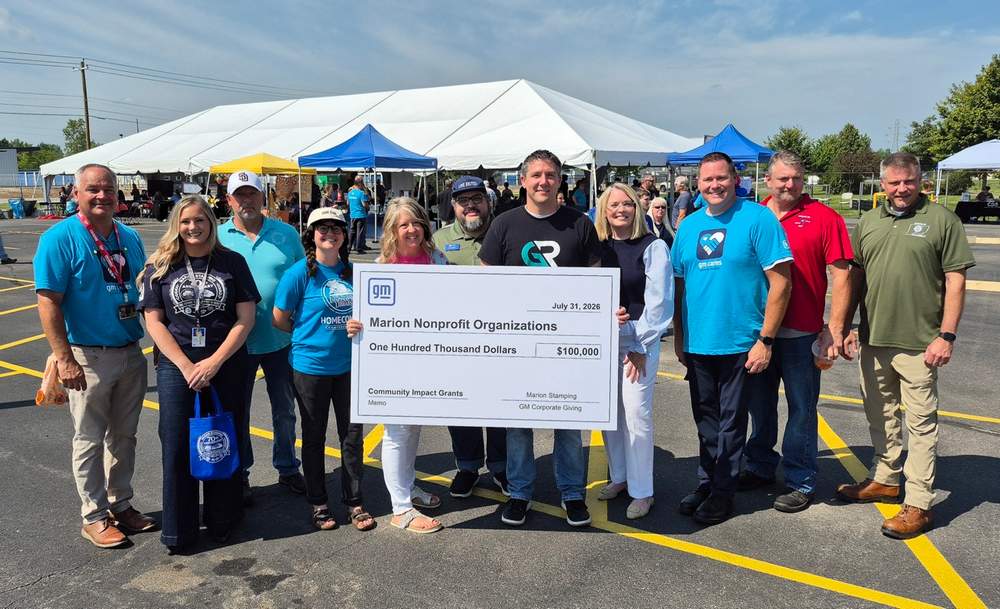
GM Helping Put Books in the Hands of Grant County Children and Strengthening Countywide Literacy Efforts
via United Way of Grant County
https://uwgrant.com/gm-helping-put-books-in-the-hands-of-grant-county-children-and-strengthening-countywide-literacy-efforts/United Way of Grant County exists because every person in Grant County deserves the opportunity to thrive, and for children, that opportunity starts with the ability to read. Today, United […] The post GM Helping Put Books in the Hands of Grant County Children and Strengthening Countywide Literacy Efforts appeared first on United Way of Grant County .

Marion Youth Sports now registering for football and cheer
via Marion Community Schools
http://www.marion.k12.in.us/apps/news/article/2215100Grades 4-6 can sign up today!

Marion schools deliver nearly 187,000 summer meals to local families
via Marion Community Schools
http://www.marion.k12.in.us/apps/news/article/2215213MCS thanks all employees and community partners who make these efforts possible!
In Congress this week — Jul 31, 2026
via Congress.gov
https://www.congress.gov/advanced-search/legislation?congresses%5B0%5D=119&legislationNumbers=&restrictionType=field&restrictionFields%5B0%5D=allBillTitles&restrictionFields%5B1%5D=summary&summaryField=billSummary&enterTerms=&wordVariants=true&legislationTypes%5B0%5D=hr&legislationTypes%5B1%5D=hres&legislationTypes%5B2%5D=hjres&legislationTypes%5B3%5D=hconres&legislationTypes%5B4%5D=hamdt&legislationTypes%5B5%5D=s&legislationTypes%5B6%5D=sres&legislationTypes%5B7%5D=sjres&legislationTypes%5B8%5D=sconres&legislationTypes%5B9%5D=samdt&public=true&private=true&actionTerms=&legislativeActionWordVariants=true&actionDateBoxCount=2&actionText=&actionText2=&dateOfActionToggle=multi&legislativeAction=Any&sponsorState=One&member=Spartz&sponsorTypes%5B0%5D=sponsor&sponsorTypes%5B1%5D=cosponsor&sponsorTypeBool=OR&dateOfSponsorshipOperator=after&dateOfSponsorshipStartDate=07%2F26%2F2026&dateOfSponsorshipEndDate=&dateOfSponsorshipIsOptions=yesterday&committeeActivity%5B0%5D=0&committeeActivity%5B1%5D=3&committeeActivity%5B2%5D=11&committeeActivity%5B3%5D=23&committeeActivity%5B4%5D=12&committeeActivity%5B5%5D=4&committeeActivity%5B6%5D=2&committeeActivity%5B7%5D=5&committeeActivity%5B8%5D=9&satellite=%5B%5D&search=&submitted=SubmittedBills our federal delegation sponsored or moved this week, from the official Congressional record. Links go to congress.gov.
Sen. Todd Young (R)
- S. 5150 — A bill to require the Comptroller General of the United States to conduct a study on chameleon carriers in the United States and require the Administrator of th — 2026-07-28: Read twice and referred to the Committee on Commerce, Science, and Transportation.
Sen. Jim Banks (R)
- S. 5172 — A bill to amend titles XI, XIX, and XXI of the Social Security Act with respect to screening for childhood-onset fluency disorders, and to require coverage of c — 2026-07-29: Read twice and referred to the Committee on Finance.
- S. 3794 — SAFE Drugs Act of 2026 — 2026-07-27: Placed on Senate Legislative Calendar under General Orders. Calendar No. 524.
Parks & Recreation Board, Regular Meeting, 8/3/26
via City of Marion
https://cityofmarion.in.gov/news-events/parks-recreation-board-regular-meeting-8-3-26The Parks & Recreation Board will hold a regular meeting on Monday, Aug. 3 rd , 2026 at Noon in the 2 nd Floor Conference Room of City Hall.
APC Sub Data Center Meeting (Wednesday July 29 2026)
via Grant County Government
Wed, Jul 29
APC Sub Data Center Meeting (Wednesday July 29 2026)
MHS is a certified FAFSA Completion Goal school again!
via Marion Community Schools
http://www.marion.k12.in.us/apps/news/article/2214986FAFSA completion is an important step to prepare students for life after high school.

Join Us for National Night Out on Tuesday, 8/4/26!
via City of Marion
https://cityofmarion.in.gov/news-events/join-us-for-national-night-out-on-tuesday-8-4-26We are excited to celebrate National Night Out on Tuesday, Aug. 4 th , from 5 – 8 pm in the Gardens of Matter Park ! We hope you’ll join us Tuesday night. Bring your family and friends!
Election Board Meeting 7-29-26
via Grant County Government
Wed, Jul 29
Election Board Meeting 7-29-26
Drainage Board Meeting 7-28-26
via Grant County Government
Tue, Jul 28
Drainage Board Meeting 7-28-26
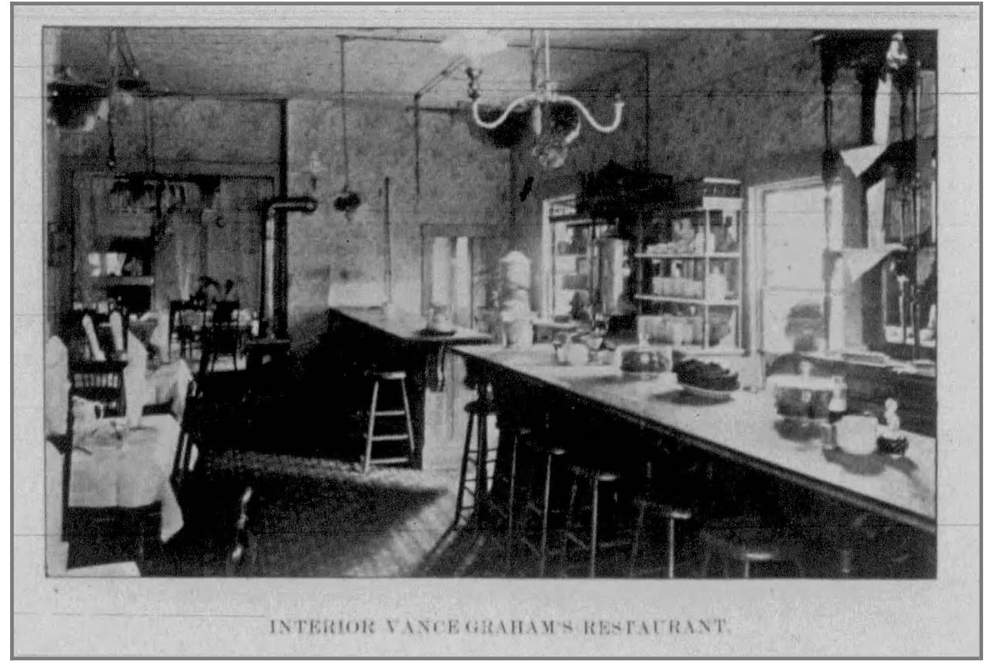
Marion's Oyster Bar
via Disappearing Marion
https://billmunn.substack.com/p/marions-oyster-barCity's dining history on the half shell

Riverfront Canvas Call for Artists
via Community Foundation of Grant County
https://givetogrant.org/call-for-artists/Let’s paint Grant County’s story—together. From bold ideas to meaningful moments, the Riverfront Canvas project is your opportunity to help bring our community to life along the riverfront. Our people. Our places. Our stories. And what makes this community feel like home. The Riverfront Canvas project is all about celebrating the people, stories, and spirit that make Grant County shine.... The pos
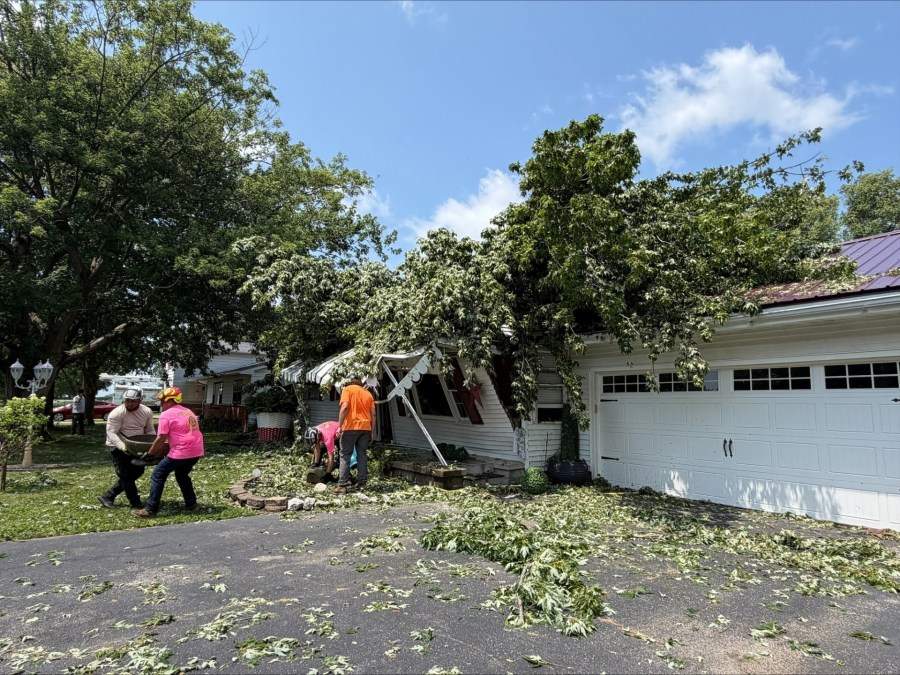
NWS: Tornado confirmed in Grant County Monday night
via WANE 15
https://www.wane.com/top-stories/nws-tornado-confirmed-in-grant-county-monday-night/A tornado touched down in Northeast Indiana Monday night, according to the National Weather Service (NWS).

VIDEO: Tornado-warned storm near Marion
via WANE 15
https://www.wane.com/top-stories/video-tornado-warned-storm-near-marion/Rotation was noted around the Gas City/Marion area Monday.
Thousands in Grant County lose power during Monday storms
via WANE 15
https://www.wane.com/top-stories/5k-lose-power-near-marion-during-monday-storms/More than 5,000 people are without power while a large storm rolled through the area.
Letters to the editor
City of Marion Claims Chickens Have Hooves
By Ryan Kellermeyer, Marion· ✓ Verified
City of Marion Claims Chickens Have Hooves
How much of what a family does on its own property is the government's business?
Most of us would land in about the same place. If what I'm doing harms my neighbor — noise, filth, danger — the city has every right to step in. That's what nuisance laws are for, and good ones protect us all. But if it harms no one? Then what happens in a fenced backyard is that family's business, not city hall's. A government that regulates the harmless isn't governing; it's meddling.
Hold onto that principle, because what follows is about chickens — quiet hens in a backyard coop — and about a Marion ordinance that fails the test twice over. It forbids something harmless. And it was never carefully considered. I can prove that part with a grammar lesson.
Chickens don't have hooves
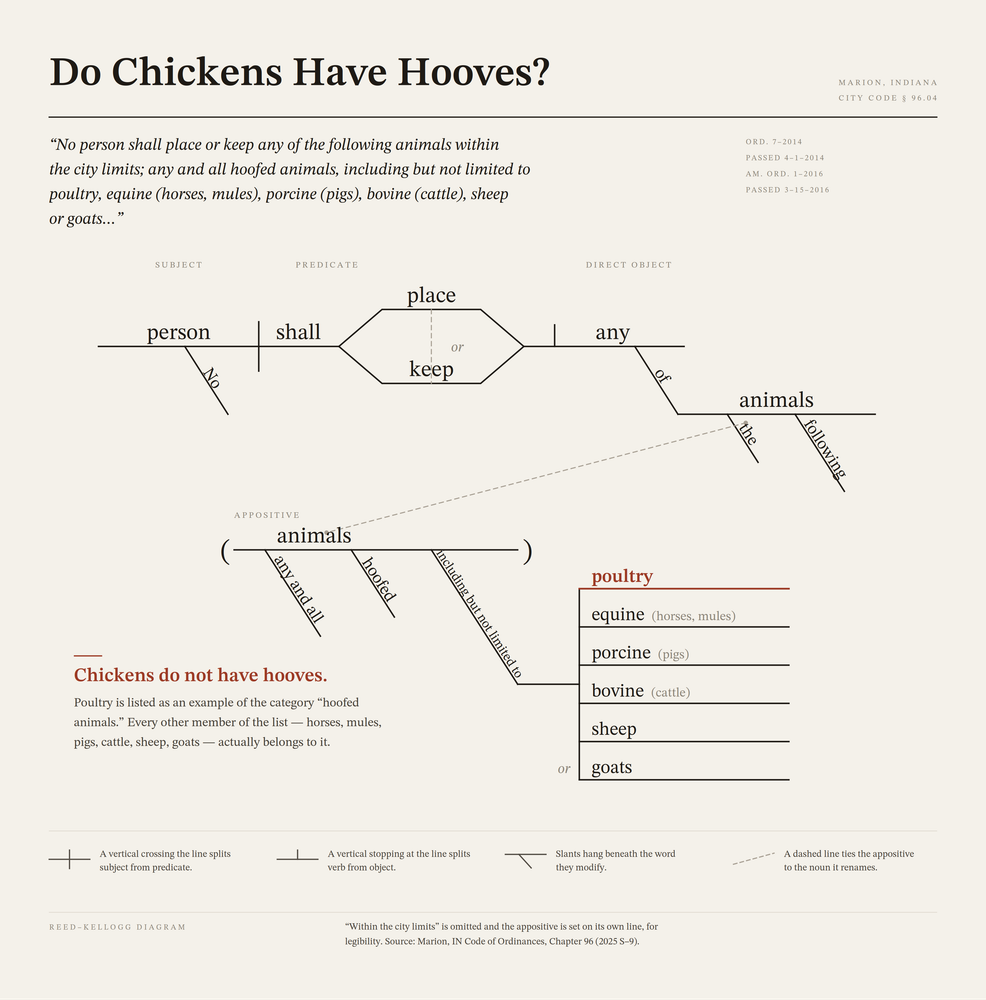
Marion City Code § 96.04 forbids anyone to "place or keep… within the city limits; any and all hoofed animals, including but not limited to poultry, equine (horses, mules), porcine (pigs), bovine (cattle), sheep or goats…"
Read that again. Marion's city code classifies the chicken as a hoofed animal.
That's the actual text, adopted as Ordinance 7-2014 and amended in 2016. And before anyone tells me I'm reading it uncharitably, let's diagram it, the way Sally Herring taught me at Madison-Grant High School.
The noun is animals. The adjective sitting under it is hoofed. Together they name the one class of thing this sentence forbids: hoofed animals.
So what do the words including but not limited to attach to? Not to some second category the sentence never names. They attach to that same noun. Everything that follows is a list of examples of hoofed animals — and the first example offered is poultry. The sentence does not set chickens apart from hoofed animals. It names the chicken as one.
Every other animal on the list actually has hooves: horses, mules, pigs, cattle, sheep, goats. Poultry is the lone entry in a category it cannot possibly belong to. Chickens have feet. With toes. I don't remember much from tenth-grade English, but I remember enough to know that sentence would not have gone over easy with a tough grader like Mrs. Herring.
The next section, 96.05, lays out every exception to the rule, and each one concerns hoofed livestock: the 4-H Fairgrounds, the animal shelter and Humane Society taking temporary custody of rescued animals, and rescued horses, donkeys or mules on lots of at least 55,000 square feet with 8,000 square feet of pasture per animal. Pasture. Fencing. Shelter. Not one line contemplates a bird.
That's the tell. This was never a policy about chickens — it was a horse-and-livestock ordinance, and somewhere along the way somebody shoehorned "poultry" into a list where it obviously does not fit. Nobody weighed whether hens belong in a city. The ban wasn't decided; it was a drafting afterthought. And that afterthought has governed our backyards for a decade.
Fowl play?
If the city itself believed in this rule, you'd expect it to be enforced.
Every February, the Tractor Supply out on the bypass fills a tub with live baby chicks and sells them to anyone who walks in. That store sits inside Marion city limits. And § 96.04 says "no person shall place or keep." A store that places live chicks in a tub and keeps them there is, on any plain reading, doing the thing the ordinance prohibits.
To my knowledge, that store has never been cited, and it never should be. The TSC chick sale runs every spring, out in the open, advertised. Whatever Marion's real position on § 96.04 may be, it clearly isn't "send code enforcement out to the bypass."
But look at what that means. We don't enforce this rule against the retailer who sells the birds, so why would we enforce it against the family that takes them home? Same chicks, same city limits, same sentence of the same code — and the only variable is which side of the checkout counter you're standing on.
That's not a policy. That's a rule the city doesn't believe in — and when an ordinance can't be applied evenly, it isn't protecting anybody. It's just sitting there waiting for the wrong neighbor to file the wrong complaint.
So the ban fails as law: accidental in its drafting, arbitrary in its enforcement. But suppose it had been written carefully and enforced fairly. Would it be good policy even then? No — and here's the affirmative case.
Family economics
You may have heard backyard hens save families money. At today's prices, they mostly don't.
Run the numbers on six hens. Feed runs about $220 a year. Add bedding, grit, replacement chicks, and a coop amortized over a decade, and you're near $400 to $500 annually for roughly a hundred dozen eggs — call it $4 to $5 a dozen. Store eggs averaged $2.14 this past June. University of Florida Extension ran the same math and found feed costs alone put a backyard dozen north of six dollars. They're right. Anyone telling you a flock pays for itself is probably selling chicken coops.
But in March 2025 the national average hit $6.23 a dozen, and on one day that month it touched $8.15. For most of the first half of 2025, store eggs cost more than backyard eggs did. Families who already had hens watched that crisis on the news instead of in their grocery cart.
That's the whole argument. Not savings — stability. A flock isn't a coupon, it's insurance. You pay a modest premium in the calm years for the privilege of not caring what avian influenza does to a barn in Iowa. Marion families ought to be allowed to make that trade-off for themselves. Right now we aren't.
Hens aren't just egg factories
Chickens are social, curious, individually recognizable animals. They form real bonds, they come when called, and they will absolutely follow a five-year-old around a yard hoping for a handful of cracked corn. Ask anyone who keeps them: every hen has a personality — the bold one, the bossy one, the one who hides. Chickens invented the pecking order. We just borrowed the phrase.
For a kid, hens are a daily lesson in responsibility, biology, and where food actually comes from. For an older resident living alone, they're company that needs you every morning. Marion permits dogs, cats, ferrets, rabbits, parrots, and lizards inside the city limits. It's hard to explain why a Rhode Island Red is where we draw the line.
Marion is the odd bird out
This isn't some untested idea. Boston University public-health researchers reviewed the 150 largest U.S. cities in 2015 and found 93% permit poultry in some capacity. Among the 100 largest, chickens are banned in only three — one of them Fort Wayne. Nationally, the American Pet Products Association counted 11 million households keeping backyard chickens in 2025, up 28% in two years. People are flocking to this for a reason.
Here in Indiana, Marion is ringed by cities that sorted this out years ago. South Bend has allowed six hens since 2013 — no roosters, a $20 permit, and a 15-foot setback. Bloomington allows five by permit. Indianapolis, Evansville, Kokomo, Carmel and Fishers allow them as well. Goshen adopted hens, then in 2018 repealed its own permit fee and neighbor-consent requirement because the program ran so smoothly it didn't need them. Fort Wayne is the cautionary tale, rejecting hens three times, most recently in December 2023.
Marion has asked for this before — 896 signatures on a citizen petition in 2015, filed away. Ten years later, maybe it's time to stop being cooped up by a law that says chickens have hooves.
The objections, addressed
Much of the case against hens is Chicken Little panic.
Noise. Hen clucking runs about 60 decibels — ordinary conversation, per Utah State University Extension. A barking dog or a lawnmower is closer to 90. A rooster's crow can reach 130. Marion already tolerates dogs and mowers all day long. If it's noise you're worried about, ban roosters, not hens.
Rodents. The honest concern isn't birds, it's feed. Rodents come for spilled grain, not for chickens. Store feed in sealed metal containers, clean up spills, pull feeders at night, and the problem never starts. That's a rule you can write directly into an ordinance — and we should.
Disease. Salmonella is real and manageable, not grounds for prohibition. The CDC's final 2024 update counted 470 infections nationwide linked to backyard poultry; the remedy is the CDC's own: wash your hands, keep birds out of the house, keep toddlers away from live poultry. As for avian influenza — the disease that caused the price spike — the outbreak began in a commercial turkey flock in Dubois County, Indiana, and commercial operations have absorbed the overwhelming majority of losses. Six hens in a Marion backyard are not a biosecurity threat.
Property values. No solid evidence a few well-kept hens affect them. What harms a block is blight and neglect — and Marion's nuisance code already covers that.
Notice what those four have in common: none of them is really about hens. Each is about bad keeping — a loud animal, spilled feed, a dirty pen — and bad keeping is already illegal. Marion's nuisance code covers a filthy coop the same way it covers a trash-filled yard, and a problem hen can be handled the way we already handle a problem dog: one address at a time, when there's an actual problem. Regulate the harm. Don't ban the harmless.
Pecking away at our freedoms
Remember the opening question — how much of what a family does on its own property is the government's business? Grant County's leadership has already answered it, on paper anyway. Most, if not all, elected officials in Grant County are Republicans, and the Grant County Republican Party's own website commits it to advancing "the core principles of self reliance" and growing "the American Dream for all citizens."
So I ask in good faith: which part of self-reliance is served by an ordinance making it illegal for a homeowner to keep hens in a fenced backyard on property she pays taxes on — an ordinance we don't even enforce against the store that sells them?
If limited government, personal responsibility, and self-reliance mean anything at the local level, they ought to mean something in our backyards.
A compre-hen-sive proposal
So let's not walk on eggshells. Here's an ordinance the Marion Common Council could adopt tomorrow, modeled on what already works in South Bend, Goshen, and dozens of peer cities:
- Hens only. No roosters. Resolves the noise objection outright.
- Up to six hens per single-family lot.
- Coop and run in the rear yard only, set back at least 10 feet from property lines and 25 feet from any neighboring dwelling.
- A predator-proof, ventilated coop with a reasonable size cap, around 120 square feet.
- Feed stored in sealed, rodent-proof containers. Non-negotiable and strictly enforced.
- No on-site slaughter.
- Incidental sale or gifting of surplus eggs permitted from the property — no signage, no wholesale, no storefront.
- Enforcement through the existing Chapter 96 nuisance and animal-control provisions, with revocation for repeat violators.
- No fee, or a nominal one. Goshen proved the red tape was unnecessary.
And while they're at it, the Council should fix the sentence. Nobody is asking them to deregulate poultry — the word covers ducks, geese and turkeys, and Marion has every reason to keep saying no to those. The fix is to move poultry out of a category it cannot belong to and regulate it on its own terms, as the proposal above does. Whatever the Council decides about hens, § 96.04 should not go another decade telling the citizens of Marion that a chicken has hooves.
The ask
The birds are already being sold, in the open, inside our own city limits, under an ordinance nobody enforces and nobody should. All anyone is asking is that Marion stop criminalizing what happens after the drive home — that the city regulate nuisances and otherwise leave our backyards up to us, to manage as we see fit.
The Council can fix this in one meeting: put a hens-only ordinance on the agenda, hold the hearing, and restore to Marion families a modest freedom that was never city hall's to take — one their neighbors in Indianapolis, South Bend, Bloomington and Goshen already enjoy.
But remember what happened to those 896 signatures: they arrived as one piece of paper, and one piece of paper is easy to file away. Voices that keep showing up are not. So if this made sense to you, say so out loud — email your council member, mention it at a meeting, forward this to the neighbor who's wanted hens for years. Councils don't move because an argument is good. They move when they keep hearing it from voters.
Let's give Marion something to crow about.
Volunteer
DSP Car Wash
via United Way Volunteer
https://volunteer.uwgrant.com/need/detail/?need_id=1286407Volunteer opportunity — sign up or learn more through United Way of Grant County.
Day of Action
via United Way Volunteer
https://volunteer.uwgrant.com/need/detail/?need_id=1291099Volunteer opportunity — sign up or learn more through United Way of Grant County.
In Memoriam
Juan Manuel "Manny" Herrera, 60, of Converse
via Owen-Weilert-Duncan Funeral Home
https://www.owenweilertduncan.com/obituaries/Juan-Herrera?obId=49158086Juan Manuel "Manny" Herrera 60, of Converse, died July 29, 2026.
Full obituary and condolences: https://www.owenweilertduncan.com/obituaries/Juan-Herrera?obId=49158086
Lola Marie Hehr, 99, of Marion
via Needham-Storey-Wampner Funeral Service
https://www.nswcares.com/obituaries/Lola-Hehr?obId=49150178Lola Marie Hehr 99, of Marion, died July 28, 2026.
Services August 3, 2026 — details at the funeral home's page.
Full obituary and condolences: https://www.nswcares.com/obituaries/Lola-Hehr?obId=49150178
Dr. John W. Kennedy MD, 82
via Needham-Storey-Wampner Funeral Service
https://www.nswcares.com/obituaries/John-Kennedy?obId=49142306Dr. John W. Kennedy MD 82, died July 28, 2026.
Services August 2, 2026 — details at the funeral home's page.
Full obituary and condolences: https://www.nswcares.com/obituaries/John-Kennedy?obId=49142306
Anna Jean McCowan, 89, of La Fontaine
via Needham-Storey-Wampner Funeral Service
https://www.nswcares.com/obituaries/Anna-McCowan?obId=49140934Anna Jean McCowan 89, of La Fontaine, died July 28, 2026.
Services August 3, 2026 — details at the funeral home's page.
Full obituary and condolences: https://www.nswcares.com/obituaries/Anna-McCowan?obId=49140934
Carol Vanlandingham, 75, of Marion
via Needham-Storey-Wampner Funeral Service
https://www.nswcares.com/obituaries/Carol-Vanlandingham?obId=49151639Carol Vanlandingham 75, of Marion, died July 29, 2026.
Services August 3, 2026 — details at the funeral home's page.
Full obituary and condolences: https://www.nswcares.com/obituaries/Carol-Vanlandingham?obId=49151639
Kaley Denise Barnes, 43, of Marion
via Needham-Storey-Wampner Funeral Service
https://www.nswcares.com/obituaries/Kaley-Barnes?obId=49151236Kaley Denise Barnes 43, of Marion, died July 29, 2026.
Services August 3, 2026 — details at the funeral home's page.
Full obituary and condolences: https://www.nswcares.com/obituaries/Kaley-Barnes?obId=49151236
Judith "Judy" A. Himelick, 88
via Armes-Hunt Funeral Home
https://www.armeshuntfuneralhome.com/obituaries/judith-judy-himelickJudith "Judy" A. Himelick 88, died July 29, 2026.
Full obituary and condolences: https://www.armeshuntfuneralhome.com/obituaries/judith-judy-himelick
Arnold K Eads, 70
via Armes-Hunt Funeral Home
https://www.armeshuntfuneralhome.com/obituaries/arnold-eadsArnold K Eads 70, died July 30, 2026.
Full obituary and condolences: https://www.armeshuntfuneralhome.com/obituaries/arnold-eads
Margaret "Maggie" Kay Hartley, 84
via Owen-Weilert-Duncan Funeral Home
https://www.owenweilertduncan.com/obituaries/Margaret-Hartley?obId=49124719Margaret "Maggie" Kay Hartley 84, died July 25, 2026.
Services July 30, 2026 — details at the funeral home's page.
Full obituary and condolences: https://www.owenweilertduncan.com/obituaries/Margaret-Hartley?obId=49124719
Goldie A. Burgener, 92, of Converse
via Owen-Weilert-Duncan Funeral Home
https://www.owenweilertduncan.com/obituaries/Goldie-Burgener?obId=49123488Goldie A. Burgener 92, of Converse, died July 27, 2026.
Services July 31, 2026 — details at the funeral home's page.
Full obituary and condolences: https://www.owenweilertduncan.com/obituaries/Goldie-Burgener?obId=49123488
Brenda Jeffries, 76
via Armes-Hunt Funeral Home
https://www.armeshuntfuneralhome.com/obituaries/brenda-jeffriesBrenda Jeffries, 76, died July 25, 2026.
Full obituary and condolences: https://www.armeshuntfuneralhome.com/obituaries/brenda-jeffries
Sandra Sue Park, 85
via Needham-Storey-Wampner Funeral Service
https://www.nswcares.com/obituaries/Sandra-Park?obId=49113556Sandra Sue Park 85, died July 19, 2026.
Services August 1, 2026 — details at the funeral home's page.
Full obituary and condolences: https://www.nswcares.com/obituaries/Sandra-Park?obId=49113556
Marjorie Ann Dill, 72
via Needham-Storey-Wampner Funeral Service
https://www.nswcares.com/obituaries/Marjorie-Dill?obId=49113564Marjorie Ann Dill 72, died July 22, 2026.
Full obituary and condolences: https://www.nswcares.com/obituaries/Marjorie-Dill?obId=49113564
David E. Spargo, Sr., 99
via Needham-Storey-Wampner Funeral Service
https://www.nswcares.com/obituaries/David-SpargoSr?obId=49080793David E. Spargo, Sr. 99, died July 23, 2026.
Services July 29, 2026 — details at the funeral home's page.
Full obituary and condolences: https://www.nswcares.com/obituaries/David-SpargoSr?obId=49080793
Luella Ann Hethcote, 94
via Needham-Storey-Wampner Funeral Service
https://www.nswcares.com/obituaries/Luella-Hethcote?obId=49114356Luella Ann Hethcote 94, died July 25, 2026.
Services August 1, 2026 — details at the funeral home's page.
Full obituary and condolences: https://www.nswcares.com/obituaries/Luella-Hethcote?obId=49114356
Janice K. Coffelt, 85
via Needham-Storey-Wampner Funeral Service
https://www.nswcares.com/obituaries/Janice-Coffelt?obId=49112865Janice K. Coffelt 85, died July 25, 2026.
Services July 30, 2026 — details at the funeral home's page.
Full obituary and condolences: https://www.nswcares.com/obituaries/Janice-Coffelt?obId=49112865
Get Grant County in your inbox
The next edition of Grant County, in your inbox every Sunday morning.
Free. Unsubscribe any time. We don't share your info.